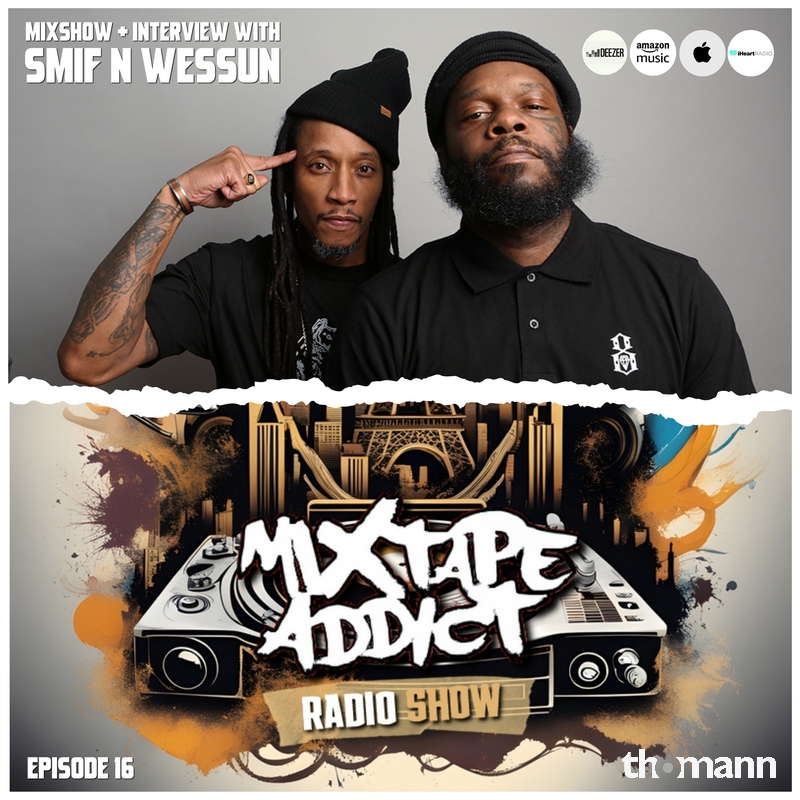
French DJ King Flow has revealed the lineup for his forthcoming weekly show, Mixtape Addict, featuring an exclusive interview with Smif-N-Wessun. Scientific Sound Asia, a prominent player in the Asian music scene, operates as a radio station, music news publisher, event organiser, and DJ agency, connecting with a global audience.
Since the age of 14, DJ King Flow, a talented artist from France, has made a lasting impact on the music industry. Known for his captivating mixtapes, he has garnered worldwide recognition and respect. His passion for Rap music fuels his creativity, inspiring him to innovate within the genre and receive acclaim and accolades from the music community.
Renowned for his innovative approach to music production, DJ King Flow is a trailblazer who pushes the boundaries of sound mixing and fusion. Collaborating with esteemed artists like Ras Kass, Torae, Juicy J, Tragedy Khadafi, O.C., and Khujo Goodie of Goodie Mob, he demonstrates his versatility and mastery in blending various musical styles into a cohesive and harmonious whole.
By transcending cultural barriers, DJ King Flow establishes profound connections with audiences through his music, which is intricately tied to his love for the genre's rich history. His beats not only convey emotions and stories but also share personal experiences. His dedication to his craft and his relentless quest for musical excellence distinguish him as a pioneer in the field, inspiring and impacting emerging artists and music fans worldwide.
From 2012 onwards, DJ King Flow has been committed to connecting cities like New York, Dallas, Providence, Miami, and Seattle. He has worked closely with his respected partner Young Amsterdam to develop a vibrant Rap scene that spans across the Atlantic. This ambitious project has involved significant travel within the United States to build relationships and foster collaborations that go beyond physical boundaries.
In late 2015, DJ King Flow brought Mixtape Addict to the scene, quickly gaining recognition on rap radio stations worldwide. By early 2019, the team was touring France, Canada, and New York, debuting the Mixtape Addict Report, a groundbreaking video interview series showcasing conversations with rap icons and influential hip-hop artists. This initiative marked a major milestone in spreading hip-hop updates to a global audience.
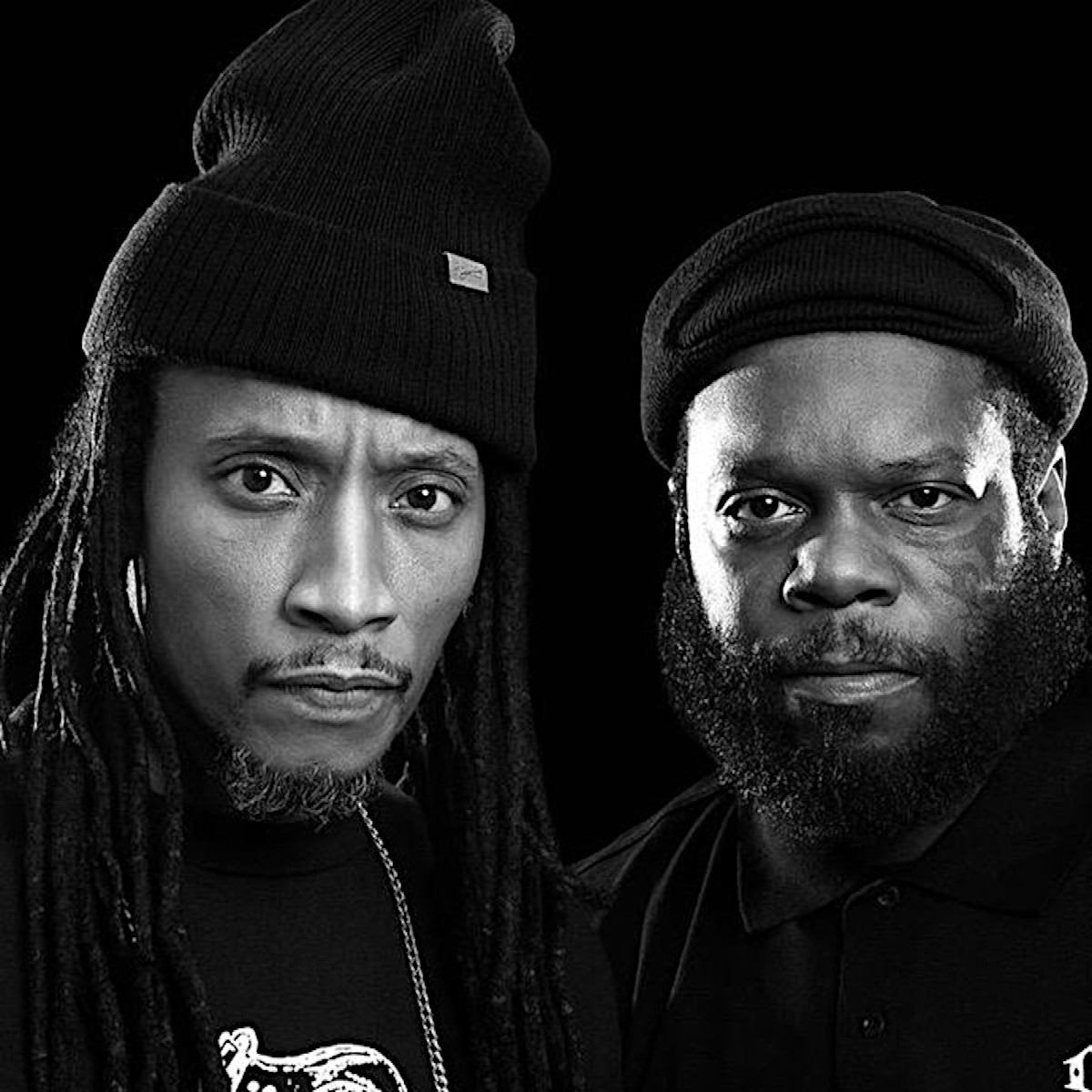
Interview Guests Smif-N-Wessun
This weeks interview is with Smif-N-Wessun, Smif-N-Wessun, also known as Cocoa Brovaz, is a renowned hip hop duo from Brooklyn, New York, consisting of Tek (Tekomin Williams) and Steele (Darrell Yates). They are prominent members of the Boot Camp Clik, a larger collective of artists that has significantly influenced the hardcore hip hop scene.
Having first appeared in 1993 on Black Moon's album Enta da Stage, the pair released their own debut album, Dah Shinin', in 1995, which is widely regarded as a classic in the genre. Produced by Da Beatminerz, the album showcases gritty, street-focused lyrics and an unpolished, genuine sound that struck a chord with both fans and critics.
Standout songs from the album are “Bucktown” and “Wrekonize,” which have gained anthem status in the hip hop community. Smif-N-Wessun have built a reputation for their commitment to their origins and their skill in remaining significant in the constantly changing hip hop scene.
Working with many artists, they have consistently produced music that mirrors their life experiences and the urban realities. Despite encountering obstacles, such as legal troubles prompting a temporary name alteration to Cocoa Brovaz, Tek and Steele have stayed committed to their art.
Thanks to their resilience and dedication to staying true to themselves, Smif-N-Wessun have established a long-lasting impact on the hip hop scene. They persist in producing music and putting on shows, keeping a solid bond with their fans and inspiring upcoming artists. Their evolution in the world of hip hop showcases their skills, determination, and the timeless allure of their music.
DJ King Flow’s Mixtape Addict Episode 16 opens with a tribute to Brooklyn legends Smif-N-Wessun, as Bucktown and Wrekonize set a gritty Boom Bap foundation that defines the show’s energy. Mike Titan, Crotona P and Silent Someone keep the tempo tight with Racks, before Unison & Flip’s Listen Up featuring Guilty Simpson and Phat Kat adds Detroit flavour and lyrical depth. Ruciano’s Era brings a harder edge, while OBLEAK and Tone Spliff return with Haunted, grounding the set in authentic underground production.
The momentum builds through Snowgoons & Lords Of The Underground’s U Can Get It and Smif-N-Wessun’s Fifty Fifty, reminding listeners why Boom Bap remains timeless. Vice Souletric adds soul with Vice For President, while Grafh and Freeway shine on Rocafella Chain. Grea8Gawd’s The 3rd Coming injects spiritual grit and confidence, leading into Smif-N-Wessun’s heavyweight collaborations with Rick Ross and Benny The Butcher on Let Me Tell Ya and This Is Heavy.
Later, Letter 4 U and On Point reaffirm Smif-N-Wessun’s balance of street poetry and wisdom. Tracks like Commandments by Ransom and Conway and Lemon with Method Man showcase the continuing evolution of grimy, lyrical Hip Hop in the modern era. Each transition maintains DJ King Flow’s signature mix of precision and depth.
Smif-N-Wessun remain one of the defining duos to emerge from Brooklyn’s golden era, with Tek and Steele building a catalogue that has long balanced rugged street poetry, spiritual weight and deep-rooted hip hop identity. Since the release of Dah Shinin’ in 1995, their music has carried a particular kind of authority, one grounded in chemistry, lived experience and a refusal to separate rap from the wider culture that shaped it.
Three decades on, that identity still feels intact, not as a nostalgic pose but as something they continue to carry with purpose. That is what makes their appearance on DJ King Flow’s Mixtape Addict series so effective. The show’s format, which centres DJs, underground credibility and the mixtape tradition, gives both Tek and Steele space to speak not only about records and touring, but about longevity, legacy and the values that still matter to them.
Rather than treating the interview like a retrospective alone, the episode links the group’s history to what they are doing now, especially the Still Shining tour and the upcoming album Infinity. The mix reflects that same balance between heritage and movement. The selections around the interview sit naturally within the kind of boom bap and underground framework that Smif-N-Wessun helped shape in the first place, but the conversation adds something more substantial.
It frames the music as part of a larger continuum, from the original album era through mixtapes, touring, the European circuit and now into a new phase marked by reunion energy, renewed purpose and another full-length project. By the time the discussion turns to Infinity, the episode has already established that this is not simply a legacy appearance. It is part of an ongoing creative cycle.
One of the strongest sections of the interview comes early, when both Steele and Tek are asked about their favourite DJs. Their answers are revealing because they focus on craft and culture rather than celebrity. Steele names DJ Logic, Evil Dee, DJ Scratch, Pete Rock, Ron G, Brucey B and Jam Master Jay among the figures who shaped his outlook, stressing the importance of DJs who still touch vinyl, mix with their hands and understand the rough, physical texture of the music.
Tek’s answer is similarly rooted in neighbourhood experience, naming Mr. R from Bed-Stuy alongside Ron G, DJ Scratch and Logic. Together, those responses make clear that for Smif-N-Wessun, DJing is not an accessory to rap culture. It is one of the pillars. That connection to the DJ tradition carries directly into their reflections on mixtapes.
Both men speak with real affection for that era, though in slightly different ways. Tek stresses how mixtapes kept him sharp, helped artists understand what was happening in the streets and created a direct link between DJs and listeners before everything became over-programmed. Steele adds another angle, noting that while the mixtape format was exciting and playful, they still ultimately saw themselves as album artists first, defining their legacy through studio records.
What is useful about that contrast is that it feels honest. They are not romanticising mixtapes without qualification. They are placing them where they belong, as a vital part of the culture, but not the whole of it. Their thoughts on DJs and playlists are also especially sharp. Both men point out that the modern playlist economy has, in some ways, become the new mixtape circuit, but they are clear that something important has been lost in the transition.
The hand, the blend, the instinct and the curation of a real DJ cannot simply be replaced by a digital list of songs. Steele’s point that the culture keeps getting repackaged and sold back after being taken from the people who built it is one of the more pointed observations in the interview. Tek’s reminder that DJs once broke records, created clean versions, and really put their names behind songs they believed in reinforces the same idea from a different angle. For both of them, the DJ remains essential, not because of nostalgia, but because the DJ still brings a human relationship to the music.
The interview also gives important space to the group’s current touring life. When asked what it feels like to still be moving through different countries thirty years after their debut, Tek answers in a way that grounds the entire episode. He speaks first about health, gratitude and the blessing of still being physically able to travel and perform. That answer matters because it moves beyond the usual language of success.
For him, longevity is not just about staying relevant. It is about being alive, strong enough to stand on stage, and able to connect with multiple generations in the same room. Steele builds on that by framing the journey in terms of what they have seen, friends lost, people buried, lessons learned, and the continuing responsibility of the platform they still have. Together, their answers make the Still Shining tour sound less like a victory lap and more like a conscious continuation of purpose.
Their comments on Europe are especially warm. Both men make clear that they see the European hip hop scene as serious, engaged and increasingly connected to the wider culture rather than separated from it. Tek speaks about the excitement of exchanging cultures directly, of seeing what is happening in Paris, Berlin, the Netherlands and elsewhere with his own eyes rather than just through a phone screen.
Steele focuses more on the way the scene has grown and how important it is that hip hop keeps expanding without being divided. What stands out is that neither of them talks about Europe as a backup market or distant fan base. They speak about it as part of the same shared movement, one where collaboration, travel and mutual respect continue to push things forward.
That broader sense of continuity also shows up in the way they speak about younger artists. Asked what advice they would give to a young duo trying to follow a similar path, they both reject the idea that anyone should try to become the next Smif-N-Wessun. Tek’s answer is particularly direct. Be better than us.
Stay true, believe in yourself, keep the pen sharp, protect your ideas and do not let another person’s doubt become your own limitation. Steele complements that with a strong defence of originality, telling younger artists not to be afraid to sound different and not to assume that immediate understanding is the only measure of value. They both emphasise business knowledge too, especially learning contracts, understanding the system and refusing to leave your future entirely in someone else’s hands.
One of the richest parts of the interview arrives when the conversation turns to Infinity. The title is introduced in a way that links directly back to Dah Shinin’, with the duo explaining that the new album is set to arrive on 10 January 2025, exactly thirty years after the release of their debut. That 360-degree return is clearly intentional, and the symbolism matters.
Infinity is not being presented as just another album drop. It is being framed as a continuation of the circle, a new work that acknowledges where they began while refusing to stay frozen there. Tek and Steele both speak about it with a mix of pride and humility, repeatedly crediting timing, growth and the circumstances that forced them to slow down and re-evaluate the project rather than rushing it out.
Their praise for 9th Wonder and the Soul Council is one of the clearest signs of how much care has gone into the album. Steele calls 9th Wonder, Khrysis, Nottz and the wider Soul Council team Jedi-level producers, and the language does not feel exaggerated. What he is really describing is trust.
He and Tek see themselves as painters in this situation, with the beats giving them the foundation they need to fully play their role. There is also a strong spiritual undertone in how they describe the album. Steele repeatedly frames Infinity as soulful, uplifting and spiritually charged, something that should raise the listener’s energy rather than simply revisit old formulas. That makes the project sound less like an attempt to repeat Dah Shinin’ and more like a mature companion to it.
The tribute to Sean Price is another essential element of the conversation. Both men speak about him with real affection and reverence, not as a symbolic gesture but as someone whose presence remains active in the way they move. Steele says very plainly that they carry Sean with them on tour and that listeners will feel his spirit in every Smif-N-Wessun show and in Infinity itself.
Tek describes him in simple but forceful terms, the greatest, solid, stand-up, God’s son. The emotional weight of that section gives the interview a deeper resonance because it reminds the listener that the group’s current journey is tied not only to success and survival, but to the memory of those who are no longer physically here.
The closing part of the episode shifts toward practical details, tour dates, the Paris show at New Morning on 1 October, Still Shining merch available only at shows, and the wider European run through Poland, the Netherlands, Germany, Austria and the UK. But even in those details, the tone remains consistent with everything else that came before. They are not simply selling dates. They are inviting listeners into a continuing cycle of culture, community and shared memory.
Taken as a whole, this edition of Mixtape Addict works extremely well because it captures Smif-N-Wessun in a moment where history and forward motion are both equally visible. The conversation honours the importance of DJs, mixtapes, physical culture and old-school principles, but it never gets stuck there.
Instead, it shows Tek and Steele as artists still learning, still touring, still mourning, still building, and still serious about the work. Infinity emerges from the interview not just as a new release, but as a statement that three decades into the journey, the circle is still turning.
Mixtape Addict episode 16
Smif-N-Wessun - Bucktown
Smif-N-Wessun - Wrekonize
Mike Titan, Crotona P & Silent Someone - Racks
Unison & Flip feat. Guilty Simpson & Phat Kat - Listen Up
Ruciano - Era
OBLEAK, Mr Hyde & Tone Spliff - Haunted
Snowgoons & Lords Of The Underground - U Can Get It
Smif-N-Wessun - Fifty Fifty
Smif-N-Wessun feat. Rick Ross - Let Me Tell Ya
Smif-N-Wessun feat. Benny The Butcher - This Is Heavy
Vice Souletric - Vice For President
Grafh, Peedi Crakk, Freeway & Memphis Bleek - Rocafella Chain
Grea8Gawd - The 3rd Coming
Smif-N-Wessun - Letter 4 U
Kadiz - On Point
Ransom, Conway & V Don - Commandments
Conway & Method Man - Lemon
DJ King Flow - Interview with Smif-N-Wessun
Listen on Mixcloud here.