DJ King Flow interviews Glasses Malone for Mixtape Addict 17.
- Oct 1, 2024
- 9 min read
Updated: Apr 2

French DJ King Flow has announced the roster for his upcoming weekly program, Mixtape Addict, which will include a special interview with Glasses Malone. Scientific Sound Asia, a key player in the Asian music industry, functions as a music news outlet, radio station, event coordinator, and DJ agency, reaching out to a worldwide audience.
From the age of 14 onwards, DJ King Flow, a skilled artist hailing from France, has left a significant mark on the music scene. Renowned for his enthralling mixtapes, he has earned global acknowledgement and admiration. His love for Rap music drives his artistic vision, motivating him to push boundaries within the genre and earn praise and awards from the music industry.
DJ King Flow is well-known for his creative methods in music production, leading the way in experimenting with sound mixing and fusion. By working with respected artists such as Ras Kass, Torae, Juicy J, Tragedy Khadafi, O.C., and Khujo Goodie from Goodie Mob, he showcases his skill and flexibility in combining different music genres seamlessly.
DJ King Flow creates deep connections with audiences through his music by surpassing cultural boundaries. His love for the genre's history is intricately woven into his beats, which not only express emotions and narratives but also reflect personal experiences. His commitment to excellence in his craft and his unwavering pursuit of musical perfection mark him as a trailblazer in the industry, motivating and influencing up-and-coming artists and music enthusiasts globally.
Since 2012, DJ King Flow has dedicated himself to bridging cities such as New York, Dallas, Providence, Miami, and Seattle. Collaborating closely with his esteemed partner Young Amsterdam, they have cultivated a dynamic Rap scene that extends across the Atlantic. This ambitious endeavour has required extensive travel throughout the United States to establish connections and promote partnerships that transcend geographical limitations.
By the end of 2015, DJ King Flow introduced Mixtape Addict, which rapidly garnered attention on hip hop radio stations across the globe. In early 2019, the team embarked on tours in France, Canada, and New York, launching the Mixtape Addict Report. This innovative video interview series featured discussions with renowned rap figures and influential hip-hop artists, signifying a significant achievement in disseminating hip-hop news to a worldwide audience.
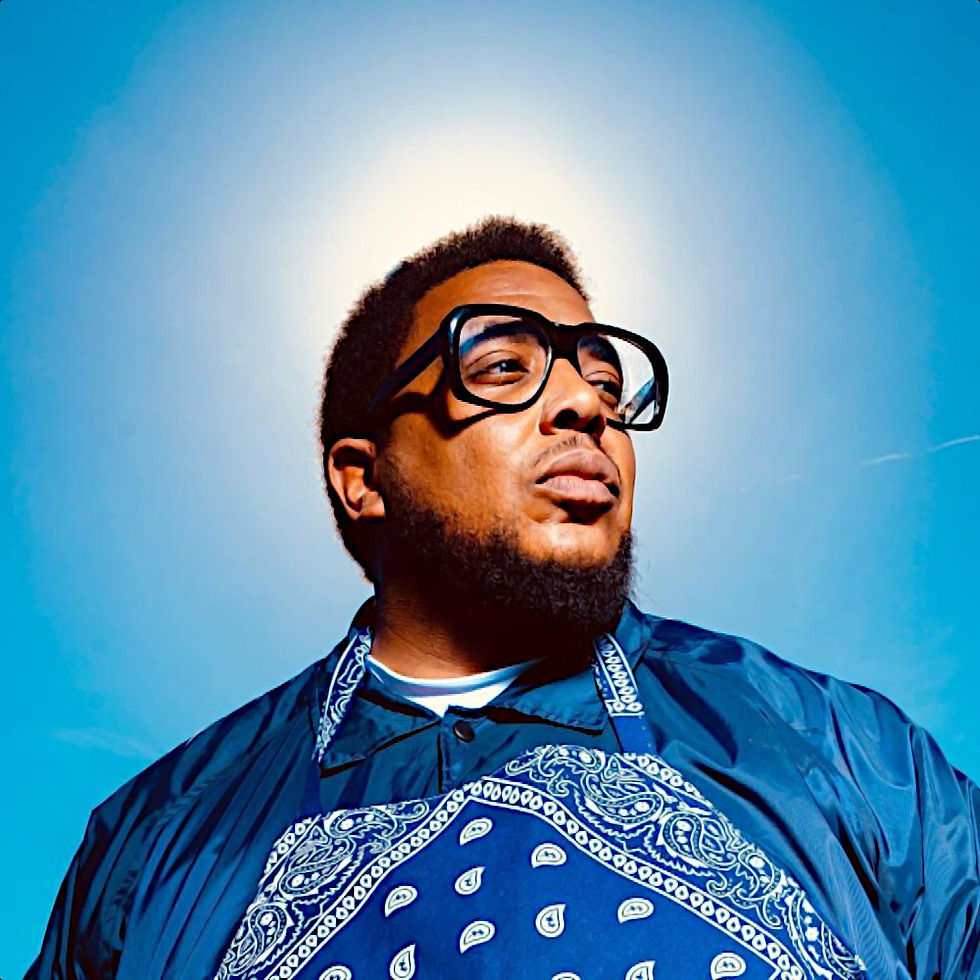
Interview Guest: Glasses Malone.
Charles Phillip Ivory Penniman, better known by his stage name Glasses Malone, is a prominent figure in the American hip-hop scene. Born on 10th December 1978 in Los Angeles, California, Malone’s journey from the rugged streets of Watts and Compton to the limelight of the music industry is nothing short of remarkable.
Growing up in the challenging neighbourhoods of Watts and Compton, Malone was exposed to the harsh realities of street life from a young age. He was a member of the Crip gang during his teenage years, an experience that would later influence his music and lyrical content.
Malone’s music career began in earnest in 2003 with the release of his mixtape, “The Crack Mixtape”. This was followed by “White Lightnin… Sticks” in 2005, which sold an impressive 50,000 copies and included the popular street single “Two Hunned”. His early success caught the attention of major record labels, and he eventually signed with Cash Money Records in 2011, turning down offers from Def Jam, Interscope, J Records, and Atlantic Records.
His debut album, “Beach Cruiser”, was released on 29th August 2011, although it had been leaked online a few days earlier. The album featured collaborations with notable artists such as Akon, Birdman, and Lil Wayne.
One of Malone’s most talked-about tracks is “2Pac Must Die (Orlando Anderson)”, which narrates the story of Tupac Shakur’s death from the perspective of Orlando Anderson. This controversial song sparked significant discussion and showcased Malone’s bold approach to storytelling.
In addition to his solo work, Malone has collaborated with a variety of artists across the hip-hop spectrum. He has appeared in music videos for Tha Dogg Pound and Tech N9ne and has been featured on the soundtrack for the video game Madden 2007.
In recent years, Malone has continued to make his mark on the music industry. He launched his label, Division Movie Company, and has been involved in developing radio content for DJ Skee and Dash Radio. His latest album, “Cancel Deeez Nutz”, features collaborations with artists like Too $hort and The Notorious B.I.G.
Glasses Malone’s journey from the streets of Los Angeles to the heights of the music industry is a testament to his resilience and talent. His unique style and powerful lyrics have earned him a dedicated fan base and a respected place in hip-hop history.
In Mixtape Addict Episode 17, DJ King Flow delivers a high-energy mix with a heavy West Coast influence, opening with Glasses Malone’s Certified featuring Akon and following up with Bring Em Out alongside Lil Wayne and Cam’ron. The energy remains fierce through One Of Those featuring Kurupt and Xzibit, and Da Bloodz reaffirms Malone’s Compton roots with hard-hitting G-Funk tones. Snoop Dogg and Doggystyleee deliver Say It Witcha Chest, while DJ Quik and Nate Dogg’s Black Mercedes adds a smooth classic touch.
Moving East, Rhyme Assassin joins M.O.P and Ruste Juxx on Run Em Up for pure Boom Bap power. oBleak and Tone Spliff’s Ermac and Maintain balance rugged lyricism and scratch-heavy production. Prince Fellaga & Dany Dan’s Vision and Mitchy Slick’s Salute add an introspective feel, while Common Language by Black Stax and DJ King Flow bridges eras through global collaboration.
Southern elements arrive through Jeezy’s 4 Zones and Young T.H.U.G’s Neva 4get, injecting trap textures and melodic hooks. The mix rounds off with Rock My World by Jay Z and Michael Jackson, closing the loop between old-school inspiration and modern craftsmanship.
Glasses Malone has always occupied a unique space in West Coast hip hop. Never fully boxed into mainstream expectations, yet never disconnected from the street-level authenticity that defines his voice, he has built a career rooted in narrative, identity and cultural awareness. His appearance on the Mixtape Addict series with DJ King Flow reinforces that position, offering a conversation that moves beyond surface-level promotion and into deeper reflections on music, format, culture and legacy.
From the opening moments, Malone sets the tone by naming his all-time favorite DJs: DJ Crazy Toones and DJ Battlecat. That choice immediately frames the conversation through a West Coast lens, one grounded in G-funk, radio dominance and musicality rather than just mixtape-era hype. It also subtly establishes one of the episode’s recurring themes: lineage. Malone consistently returns to the idea that hip hop is not just about creating in the present, but about understanding and carrying forward what came before.
That idea becomes especially clear when the discussion turns to mixtapes. Unlike many artists who used the format purely as a promotional tool, Malone explains that he never fully approached mixtapes in the traditional sense. Even projects labeled as mixtapes, such as The Electric Chair, were built with the structure and intention of albums.
For him, the goal has always been storytelling and cohesion. The distinction matters because it highlights a creative philosophy that prioritizes narrative over format. Whether it is a mixtape or an album, the objective remains the same: build a complete body of work.
At the same time, he acknowledges the creative freedom that mixtapes offer. Without the constraints of labels, expectations or commercial pressure, artists are able to experiment more freely. Malone suggests that this mindset should not be limited to mixtapes alone. Instead, artists should carry that same freedom into their album-making process. It is a subtle critique of modern music, where even with more tools and independence than ever, many artists still operate within invisible constraints.
One of the most intriguing revelations in the interview is the existence of an unreleased project built entirely over Ice Cube instrumentals, titled Cold As Ice. Recorded over a decade ago, the project was originally intended to involve DJ Crazy Toones, whose passing ultimately halted its release.
What makes this story compelling is not just the project itself, but the respect Malone shows for the process. Rather than forcing it out without the right context or co-sign, he chose to leave it unfinished. Even now, he speaks about potentially revisiting and re-recording it, emphasizing that certain ideas require the right timing and alignment.
The conversation also highlights Malone’s continued connection to the mixtape culture through his recent collaboration with DJ Eazy from Berlin. Hosting a mixtape after more than a decade away from that format, he describes the experience as refreshing, particularly because of the cultural energy that surrounds it. That connection to Europe naturally leads into a broader discussion about the global hip hop scene.
Malone’s perspective on international hip hop is both grounded and insightful. Rather than viewing it as a separate movement, he frames it as a natural extension of the same conditions that gave birth to hip hop in the United States. Wherever there are marginalized communities, there is potential for hip hop to grow. His point is simple but powerful: hip hop is not defined by geography, but by circumstance. From France to Germany, from Russia to Japan, the culture thrives in spaces where people need a voice.
What stands out is his nuanced take on struggle. While hip hop is often associated with hardship, Malone points out that those living within these environments do not always perceive their experiences as negative. Instead, they are simply part of everyday life. Hip hop’s power lies in transforming those realities into something expressive, relatable and, at times, aspirational. It is this transformation that allows the culture to resonate globally, turning local experiences into universal language.
The discussion then shifts toward his recent self-titled project, Glasses Malone. By revisiting the name of an earlier mixtape, he creates a bridge between past and present. However, this is not a simple re-release or nostalgic callback. Instead, it is a reintroduction, a way of showing growth.
Malone emphasizes how much he has evolved as an artist, both technically and creatively. The project becomes a reflection of that progression, allowing listeners to see the full arc of his journey when exploring his catalog on streaming platforms.
This naturally leads into one of the most thought-provoking parts of the interview: his analysis of how music is consumed today. Malone argues that artists are not paying enough attention to the medium through which their music is experienced.
Historically, formats like vinyl, cassettes and CDs directly influenced how music was structured, from song length to album duration. In the streaming era, that awareness has diminished. While artists may feel freer, he suggests that this freedom is somewhat illusory. The medium still matters, and understanding it is key to creating impactful music.
In response to this shift, Malone has taken a hands-on approach by reintroducing physical formats through his platform, the Crip Store. Offering CDs, cassettes, vinyl and even custom Walkmans, he is actively working to preserve the tangible experience of music. His reasoning goes beyond nostalgia. He believes that something essential is lost when music exists only on a phone. The act of playing music, setting a mood, interacting with sound in a physical way, adds a dimension that digital consumption often lacks.
His preference for CDs reflects his own upbringing, but he also expresses a deep appreciation for vinyl, particularly the emotional response it generates. That appreciation is influencing his future work, including a project specifically designed for vinyl listening. This attention to format once again reinforces his broader philosophy: music is not just about sound, but about experience.
When the conversation turns to G-funk, Malone’s sense of responsibility becomes even more apparent. While he initially approached music through blues and soul influences, he now fully embraces his role in carrying forward the West Coast sound.
He describes G-funk not just as a style, but as a cultural inheritance, something tied to identity, environment and legacy. By continuing to incorporate funk elements into his music, he ensures that this signature sound remains present for new generations.
His thoughts on timeless music align with this perspective. Rather than focusing on trends or technology, he points to the importance of live instrumentation. Instruments, unlike certain digital sounds, do not age in the same way.
A bassline played on a real instrument carries a permanence that transcends eras. This belief connects back to the roots of hip hop, where live musicianship and sampling coexisted to create some of the genre’s most enduring work.
The interview closes with practical advice for emerging artists and producers. Malone stresses the importance of learning from those who came before, urging younger creatives to seek out experienced producers and absorb their knowledge.
In an era where information is widely available but often overlooked, this emphasis on mentorship and history feels particularly relevant. His message is clear: talent alone is not enough. Understanding the craft, the business and the culture is what leads to longevity.
Overall, this episode of Mixtape Addict presents Glasses Malone as more than just a rapper. He comes across as a thinker, a curator and a custodian of culture. Whether discussing mixtapes, global hip hop, physical media or G-funk, his insights consistently point back to the same core idea: music is a living tradition. It evolves, but it also requires preservation. And artists who understand both sides of that equation are the ones who leave a lasting impact.
Mixtape Addict episode 17.
Glasses Malone & Akon - Certified
Glasses Malone, Lil Wayne & Cam'ron - Bring Em Out
Glasses Malone, Kurupt & Xzibit - One Of Those
Prince Fellaga & Dany Dan - Vision
Rhyme Assassin, M.O.P & Ruste Juxx - Run Em Up
oBleak & Johnny Slash - Maintain
oBleak, Mr Hyde & Tone Spliff - Ermac
Glasses Malone - Da Bloodz
Glasses Malone & LA Giantz - This Iz L.A
Jeezy, Akon & MikeWillMadeIt - 4 Zones
Doggystyleee & Snoop Dogg - Say It Witcha Chest
Mitchy Slick - Salute
Don Jon De Basturd - July 95
Young T.H.U.G - Neva 4get
Lex Lakaiser - Out Cheer Hustling
DJ Quik & Nate Dogg - Black Mercedes
Jay Z & Michael Jackson - Rock My World
Black Stax, DJ King Flow & Tiske Sanka - Common Language
DJ King Flow - Interview with Glasses Malone
Listen on Mixcloud here.


Comments