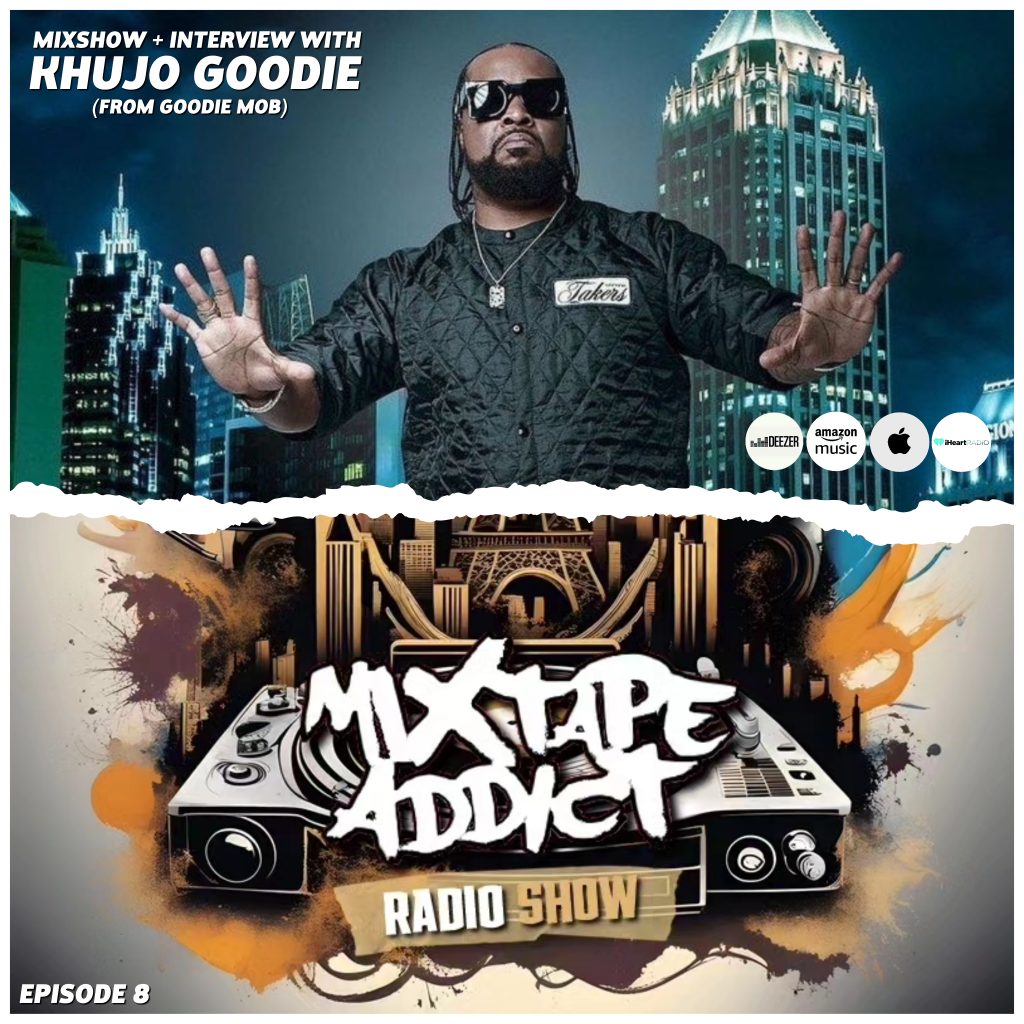
French DJ King Flow has revealed the tracklist for his new weekly show, Mixtape Addict, featuring the best Rap, Hip Hop, and Boom Bap songs and an interview with Khujo Goodie. Scientific Sound Asia operates as a radio station, promoter, and DJ agency in Asia, catering to a global audience.
From the age of 14, the French artist, DJ King Flow, has been making a notable mark in the music scene through his mixtapes born from his love of Hip Hop history, 90s Rap, and 90s Hip Hop. He is acclaimed for his exceptional beats and has worked with well-known world star Hip Hop artists like Ras Kass, Torae, Juicy J, Tragedy Khadafi, O.C., and Khujo Goodie from Goodie Mob.
Starting in 2012, he has committed to connecting different cities like New York, Dallas, Providence, and Seattle to establish a vibrant transatlantic movement alongside his esteemed longtime collaborator, Young Amsterdam, to travel and meet with Hip Hop collaborators in the USA and Canada. This ambitious project has involved extensive travel across the United States to build relationships and encourage partnerships with Hip Hop producers and Hip Hop radio stations that go beyond physical distances.
King Flow conceived the concept for Mixtape Addict in late 2015, which eventually achieved global acclaim. Starting in early 2019, the team embarked on trips to France, Canada, and New York to introduce the innovative Hip Hop news and video interview series known as Mixtape Addict Report, marking a significant milestone.
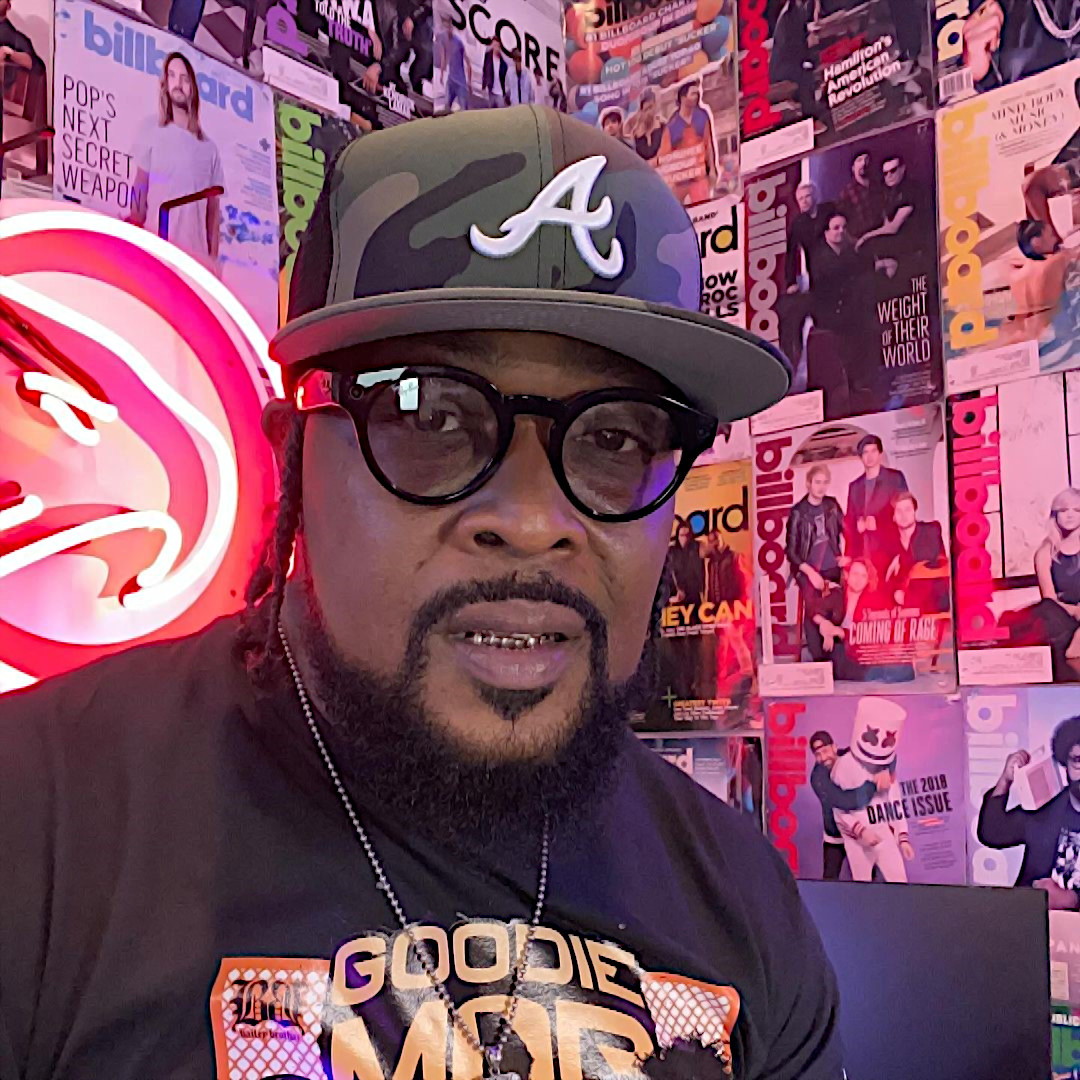
Guest for interview Khujo Goodie
Within the realm of hip-hop, there are few narratives as captivating and motivational as the story of Khujo Goodie. Being one of the original members of the iconic ensemble Goodie Mob, Khujo has made a lasting impact on the music scene. His path, filled with successes and challenges, showcases his resilience and the lasting influence of music.
Khujo Goodie, originally named Willie Edward Knighton Jr., was raised in Atlanta, Georgia, where he was immersed in the diverse cultural heritage of the South. This upbringing would go on to shape his musical style. Goodie Mob was established in the early 1990s by Khujo, Cee-Lo Green, T-Mo, and Big Gipp, and they soon became known for their distinctive fusion of Southern hip-hop and thought-provoking lyrics.
In 1995, Goodie Mob's first album, Soul Food, was well-received both critically and commercially. The album's focus on social justice, spirituality, and Southern pride struck a chord with the audience, solidifying the group's position as trailblazers of Southern rap. Songs such as “Cell Therapy” and “Soul Food” emerged as iconic tracks, highlighting Khujo's unique vocals and lyrical talent.
Back in 2002, Khujo experienced a significant change in his life after being in a severe car crash that led to the amputation of his right leg below the knee. While this event could have put an end to his career, Khujo's determination prevailed. He made a comeback in the music industry with even more resolve, persisting in his creative work and performances.
Even with the obstacles, Khujo continued to be a prominent and impactful presence in the world of hip-hop. In 2013, Goodie Mob came back together and put out the album Age Against the Machine, which garnered positive feedback from both fans and critics. Additionally, Khujo delved into solo endeavours, solidifying his lasting influence in the music business.
Khujo Goodie's narrative is characterised by determination and dedication. His impact on the hip-hop scene, whether as part of Goodie Mob or as a solo performer, has been profound. Utilizing his music and his individual experiences, Khujo remains a source of inspiration for supporters globally, showcasing that genuine creativity can overcome challenges.
Episode 8 opens with Cell Therapy by Goodie Mob, setting a socially aware tone that defines the foundation of Southern Conscious Rap. Khujo Goodie takes the spotlight across multiple tracks, including Doing Me and Write Off, where his distinctive delivery and grounded lyricism bring authenticity to the mix. DJ King Flow’s remix of Bills bridges generations, merging his contemporary production with Khujo’s timeless Southern voice.
From the South, the show transitions seamlessly into gritty East Coast Boom Bap. Barbarian by DJ King Flow & Gramz Da Hustla and Sean Price’s Bar-Barian hit with heavy drums and uncompromising bars. Rap Shit by Torae & Marco Polo and The Shit Is Real (DJ Premier Remix) by Fat Joe add that unmistakable New York swing, complete with sharp cuts and sample-driven production. Each track underscores DJ King Flow’s curatorial skill in weaving regional sounds into one cohesive narrative.
The midsection dives deeper into underground energy with standouts like Jim Duggin by Rufus Sims & Grea8Gawd and Mr Sims Astray by Jhiakana, both charged with lyrical intensity and raw tone. OSVN’s Mindset and Hectik & Cappadonna’s Brave Hearts elevate the message-driven core of the mix, while Muddy Jonez’s Da Bar Association rounds out the underground section with unfiltered truth. Haunted by oBleak & Necro injects a horrorcore edge, a grim nod to Hip Hop’s darker corners.
In the closing stretch, You Know The Deal brings together established voices in a track that reflects lineage and technical skill, providing a fitting conclusion to the musical portion of the episode. The mix maintains a consistent balance between Southern identity, East Coast Hip Hop influence and underground expression, before transitioning into an in-depth interview, shifting the focus from selection to reflection. This progression frames the episode as both a curated set and a broader discussion of hip hop’s enduring values.
This conversation provides deeper insight into Khujo Goodie’s place in hip hop history, beginning with his reflections on the mixtape era and the role DJs played in shaping how people discovered music. He speaks with real respect for figures such as Terminator X, Eric B, Jazzy Jeff, Cut Creator and DJ Drama, placing mixtapes at the heart of the culture because they gave listeners access to underground records and unreleased material while giving artists a greater degree of freedom.
Rather than treating mixtapes as nostalgia alone, he frames them as an important vehicle for expression, especially for music that would not otherwise have reached people. The interview also offers valuable detail on the formation of Goodie Mob.
Khujo explains that the group came together from a combination of existing relationships, neighbourhood ties and practical thinking. He and T-Mo were already working as the Goodie Mob Lumberjacks, while CeeLo and Big Gipp had their own paths.
After appearing with OutKast on Git Up, Git Out, the idea emerged to bring everyone together so they could enter the industry as a unified force rather than as separate acts arriving at different times. His account makes the group feel less like a label invention and more like a natural consolidation of talent driven by timing, friendship and shared purpose.
A major theme in the conversation is Atlanta’s rise. Khujo links the city’s growing cultural visibility to the 1996 Olympics, but he also makes clear that the music scene had already been developing its own identity beneath that wider attention. He describes Atlanta’s sound as something distinct from Florida or Texas, and credits that difference, along with the work of OutKast, Goodie Mob and Organized Noize, with helping people recognise that something new was happening in the city.
His comments reinforce the idea that Atlanta did not simply become important through industry momentum. It became important because its artists had built a sound with character and purpose.
He also gives practical advice to younger artists, stressing the need to stay the course, understand how the industry works and build a fan base before expecting results.
That section of the interview is especially grounded because it avoids romanticising the business side of music. He talks openly about how little streaming pays, how difficult it is for most artists to earn real money from recordings alone, and why merchandise, direct support and independent infrastructure matter. For him, the work has to be sustained by love of the craft as much as by commercial hope.
Another strong theme is giving back. Khujo discusses his Pavementality mixtape as a way of supporting independent artists, describing it as a project built to help underground voices gain visibility. He explains that the idea came from a younger artist he met in Pittsburgh, and he is careful to credit that contribution rather than present the project as his alone.
That willingness to listen, especially to younger people, becomes one of the interview’s more revealing qualities. It shows an artist who values legacy not as a closed chapter, but as something that should create opportunities for others. The final part of the interview broadens into questions of longevity, family and adaptation. Khujo argues that lasting power begins with personal motivation and inspiration, but he also returns to the importance of substance, pointing out that Goodie Mob’s catalogue has endured because it was built on more than trend or novelty.
He speaks warmly about hearing from younger listeners who discovered the group through their parents, and he frames that kind of generational reach as more meaningful than money alone. At the same time, he is still looking forward, discussing new merchandise, a family-led creative process, podcast work, digital television plans and his interest in building his own platform rather than relying entirely on YouTube or streaming services.
Through both the mix and the interview, this episode of Mixtape Addict presents Khujo Goodie as more than a legacy figure. He comes across as an artist still engaged with the present, still aware of how the industry is changing, and still committed to building something with substance. The result is an episode that honours his foundational role in Southern hip hop while also showing how that legacy continues to evolve through independence, adaptability and a clear sense of purpose.
Mixtape Addict episode 8
Goodie Mob - Cell Therapy
Jhiakana - Mr Sims Astray
DJ King Flow & Khujo Goodie - Bills (Remix)
DJ King Flow & Gramz Da Hustla - Barbarian
Sean Price - Bar-Barian
Rufus Sims, Grea8Gawd & IAmGawd - Jim Duggin
Khujo Goodie - Doing Me
Khujo Goodie - Write Off
oBleak & Necro - Haunted
Torae & Marco Polo - Rap Shit
Lloyd Banks & Rakim - You Know The Deal
Muddy Jonez - Da Bar Association (Prod. JH Tellher)
OSVN - Mindset
Hectik & Cappadonna - Brave Hearts
Fat Joe - The Shit Is Real (DJ Premier Remix)
Khujo Goodie - Interview by DJ King Flow
Listen on Mixcloud here.