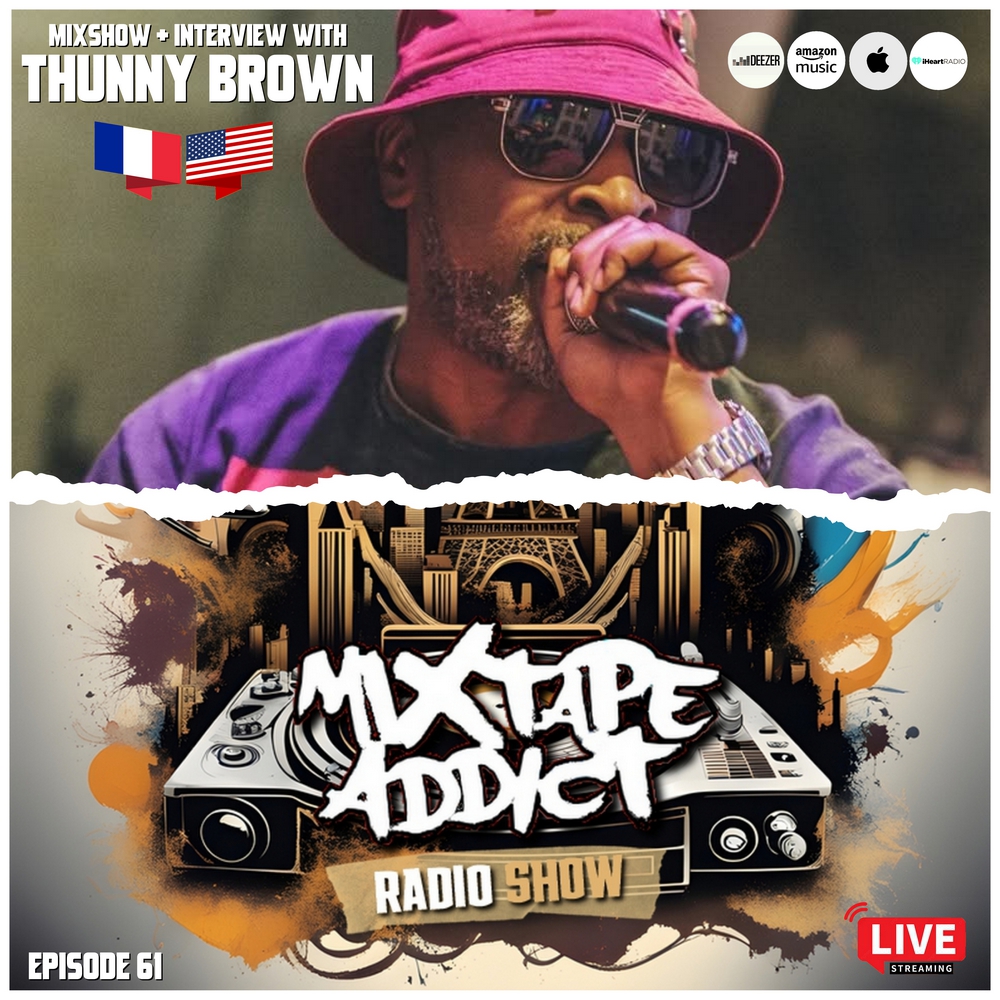
DJ King Flow, the French DJ and producer behind Mixtape Addict, returns with another edition of the programme featuring Brooklyn MC Thunny Brown on Scientific Sound Asia. Scientific Sound Asia operates as an Asian electronic music radio station, DJ agency, promoter and music news platform, connecting underground artists and listeners across the region and internationally.
DJ King Flow began DJing at the age of fourteen and developed a style firmly rooted in Boom Bap and the traditions of the 1990s golden era. His approach combines that foundation with contemporary underground releases, allowing established artists and newer independent voices to sit naturally alongside one another.
That connection between different generations has become an important part of his identity as both a DJ and producer. Hard drums, sample-driven production and lyric-focused records remain central to his selections without turning the programme into a purely nostalgic look at its past.
Throughout his career, King Flow has worked with artists including Ras Kass, Tragedy Khadafi, O.C., Juicy J and Khujo Goodie. These collaborations have helped connect his production work with different strands of American underground artistry while maintaining the musical principles that shaped his early years behind the decks.
In 2015, he launched Mixtape Addict as a platform dedicated to independent artists. The project has since developed beyond a conventional radio show, combining new music, mixtapes, artist interviews and support for rappers, DJs and producers working outside the mainstream.
Interviews have become an important part of the platform through The Mixtape Addict Report. Filmed across locations including France, Canada and the United States, the series gives artists space to discuss their careers, influences, releases and experiences within independent rap.
King Flow also continues to develop his own production catalogue alongside the radio and interview work. Projects such as The Adventures of F.J. Parker and Trill Legacy (Instrumentals) place greater emphasis on his beatmaking, demonstrating the Jazz-influenced melodies, samples, drums and deeper grooves behind his production style.
His collaborative releases extend that work across different underground scenes and generations of MCs. Tracks and projects involving Faf Larage, Napoleon Da Legend, Imam T.H.U.G., Khujo Goodie, ISH-ONE, King Khazm and others reflect the international network that has developed around Mixtape Addict.
Rather than concentrating exclusively on artists from France or the United States, DJ King Flow uses the programme to connect independent artists from different locations. The common thread remains lyricism, beatmaking and a respect for the foundations of the culture while continuing to introduce current artists and releases.
This edition continues that approach with Brooklyn MC Thunny Brown joining the programme as the featured guest. His appearance adds another voice from the American underground to a series built around independent artists, interviews and DJ King Flow's continuing exploration of their culture.
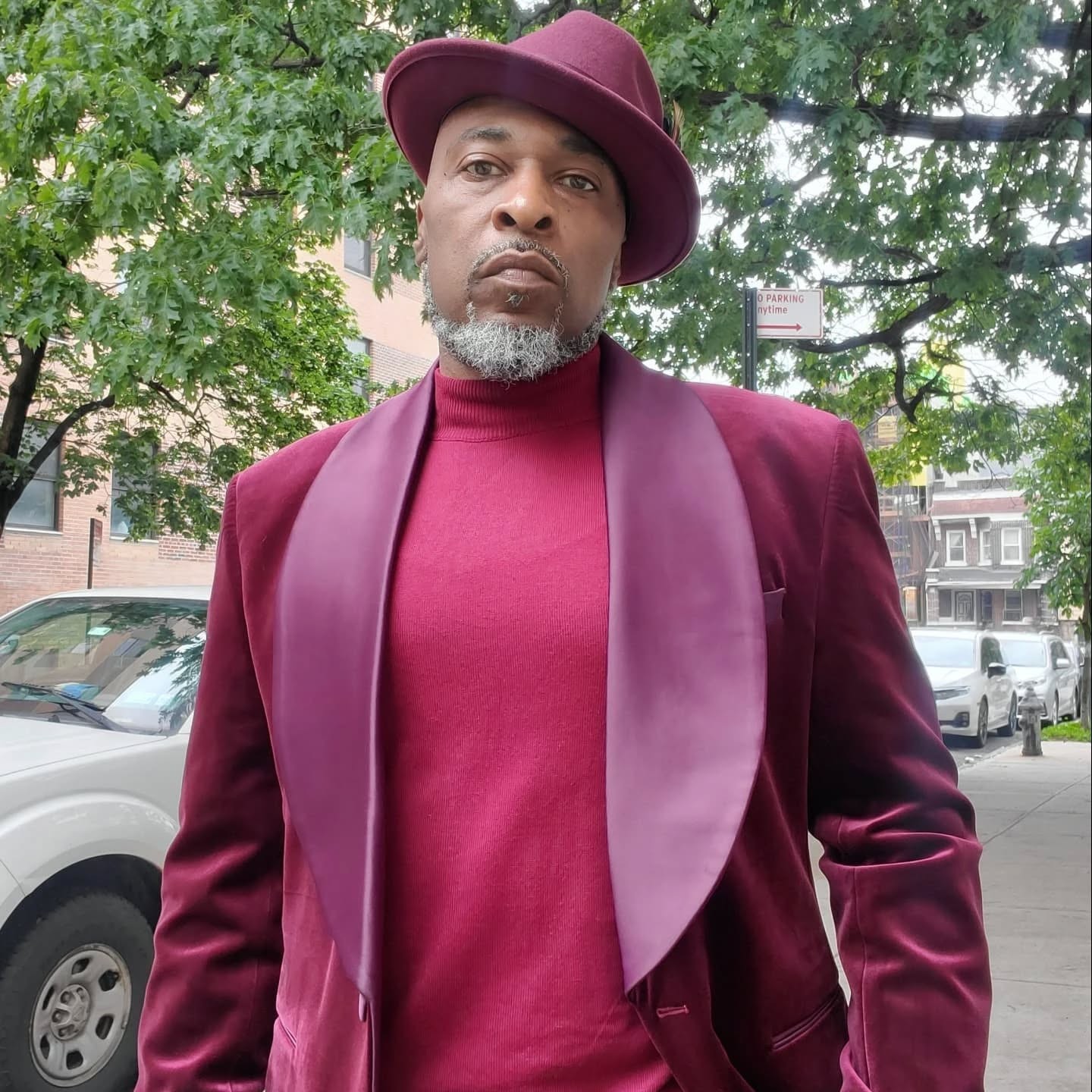
Interview Guest Thunny Brown
Thunny Brown, also known as The Thundah God, is a Brooklyn-born MC whose style is rooted in the raw lyricism and direct storytelling associated with East Coast Hip Hop. Emerging from Brownsville, he has built his identity around commanding delivery, gritty production and a strong connection to New York’s underground rap tradition.
His music places particular emphasis on bars, presence and character rather than polished mainstream presentation. That approach gives his work a deliberately rugged feel, with blunt narratives and forceful vocal performances remaining central to his sound.
One of his standout releases, Sweet, reflects that classic New York influence through heavy basslines and a direct vocal style. The track helped reinforce his position within the independent underground while showing how comfortably he works within a traditional East Coast framework.
Thunny Brown has also collaborated with artists including Ruste Juxx and Supreme The Eloheem. Tracks such as Gators, Wolves, & Generals bring together several strong Brooklyn voices, placing lyrical performance at the centre of the production.
His wider catalogue includes the 2020 album Heavenly Sword alongside singles such as Tek It Off and Hand on the Bible. These releases continue the same emphasis on hard-edged writing, street-level storytelling and the uncompromising delivery associated with his work.
Freestyles also form an important part of his output, with tracks such as Population Control and Thunderous Flying Daggerz demonstrating the looser and more spontaneous side of his approach. These recordings allow his wordplay and delivery to take greater prominence without moving away from the raw character of his studio material.
Through releases, visuals, collaborations and live appearances, Thunny Brown has remained closely connected with Brooklyn’s independent Hip Hop scene. His work reflects the influence of classic Boom Bap while maintaining enough flexibility to sit comfortably alongside more contemporary underground production.
As the featured guest on Mixtape Addict, Thunny Brown brings that background directly into the programme through conversation about his music, creative process and experiences as an independent artist. His appearance provides another connection between DJ King Flow’s international platform and the continuing tradition of underground Hip Hop coming out of Brooklyn.
Episode 61 opens with DJ King Flow, Thunny Brown and Mic Furio on Struggle, immediately grounding the set in East Coast Hip Hop with motivational street bars and sharp cuts. Tek It Off and The Funeral continue that direction through Thunny Brown’s forceful delivery and a rugged Boom Bap foundation.
Lex Lakaiser’s I Still Shine and Mike Titan with Silent Someone on In The Beginning bring a more reflective strain of Underground Hip Hop, built around dense writing and classic sample-based production. Lord Goat and Ill Bill raise the intensity with Sunday, while Mirage brings Eto, Edo G, Masta Ace and DJ Fly together for a veteran-heavy posse cut rooted in East Coast rap tradition.
OT The Real and 38 Spesh deepen the street-centred feel with Never Saw Me and Philly Special, pairing hard-edged narratives with boom-heavy production and a darker regional tone. Fee The Evolutionist, REKS and DJ Myth follow with Gifted, before Tony Moxberg, Jadakiss, Sheek Louch and Benny The Butcher add a sharper mafioso and hardcore rap influence through Love.
Lloyd Banks and Ransom continue the lyrical pressure with 1982, combining detailed street writing with the colder edge associated with New York underground rap. DJ Hoppa, Kail Problems and Marley B then provide a more fluid transition through Get Your Own, while 4-Ize and DV Alias Khryst keep the closing stretch focused on independent lyricism and character-driven delivery.
The episode finishes with DJ King Flow interviewing Thunny Brown, extending the musical focus into a direct conversation about his work and approach. Across Episode 61 the programme consistently favouring regional identity and lyrical substance over broader genre labels.
DJ King Flow welcomed Brooklyn MC Thunny Brown to Mixtape Addict for a conversation about mixtape culture, his links with Boot Camp Clik, Sean Price, Dr. Period, current music and his growing work in television and film. The pair already knew each other personally, giving the discussion a relaxed tone as Thunny spoke about Brownsville, the people who helped shape his career and the experiences that kept him involved in Hip Hop.
Asked to name his favourite DJ, Thunny selected Marley Marl because of the producer and selector's influence on many of the records he heard while growing up. He remembered Marley Marl as an important presence behind the music he used for his own pause tapes and placed him among the pioneers whose work helped establish the production techniques later generations inherited.
Thunny also discussed the continuing relevance of older Hip Hop artists, rejecting the idea that an MC should automatically stop performing simply because they reach a certain age. Seeing veteran rappers still commanding audiences convinced him years ago that there was a viable place for established artists to keep recording and performing, just as musicians in Rock, Reggae, Blues and other genres have done for decades.
His feelings about the traditional mixtape era were more complicated, because he remembers its best years as an exceptional period while also recognising how oversaturation eventually weakened the format. Thunny preferred tapes built around exclusives, skilled mixing and a strong DJ identity, arguing that five excellent mixtapes meant more to him than hundreds that simply placed songs back to back.
He praised DJs such as Ron G, Doo Wop, DJ SNS, Kid Capri and Funkmaster Flex for helping establish that standard and for finding ways to carry aspects of mixtape culture into the present. Thunny particularly appreciated seeing older DJs remain active rather than treating their work as something that belonged only to the past, whether through live performances, digital archives or new releases.
Looking back at his own beginnings, Thunny explained that he first participated in Hip Hop through dancing before developing enough confidence in his rhyming to concentrate on becoming an MC. A major change came when he met Sean Price in the same neighbourhood, with Price recognising something in the young rapper, taking him under his wing and helping him record some of his earliest material.
That relationship placed Thunny around Sean Price, Rock and other members of the wider Boot Camp circle, where he received beats, advice and first-hand experience of how records were constructed. He described Sean Price and Rock as mentors and said the wider camp embraced him, even though circumstances and other commitments meant he was not present on as many Boot Camp recordings as he might otherwise have been.
Thunny later became connected with producer Dr. Period and gained experience with both music creation and behind-the-scenes industry work. Being around artists and producers whose catalogues he already respected forced him to balance admiration with concentration, because he understood that being in those rooms only mattered if he used the opportunity to learn and contribute.
Musically, Thunny said he has no interest in releasing material simply to keep pace with everybody else and prefers to give each project enough time to develop properly. His previous album Heavenly Sword generated more than a dozen visuals, while subsequent singles, features and collaborations kept new material circulating without forcing him into an unnecessary release schedule.
Among the records discussed were Take It Off with DJ King Flow, Hand on the Bible, The Funeral, Red Wall and Thunderous Flying Daggers, alongside the first single from his forthcoming album The Thunder God. Thunny described music as something he treats as a serious commitment rather than a hobby, stressing that artists eventually have to sit down, write and create instead of waiting for motivation to arrive from somewhere else.
That attitude also informed his comments about pressure and longevity, with Thunny acknowledging that many of the people who begin making music together will not necessarily remain involved years later. He sees discipline, consistency and the willingness to sacrifice time for the craft as necessary qualities for anyone trying to stay active over an extended period.
Another substantial part of the discussion covered acting, an area Thunny had wanted to enter when he was younger but initially found difficult to access without money or trustworthy guidance. Years later, information from a friend working in set design helped him understand how background performers were finding legitimate opportunities, and he began applying for work around the period of the pandemic.
That decision eventually led to appearances or set work connected with productions he identified as Raising Kanan, The Equalizer, The Gilded Age, Happy Gilmore 2, Fallout and Daredevil. Approaching his early fifties, Thunny described finally establishing himself within acting as particularly satisfying because he had once questioned whether the opportunity would ever arrive.
He also explained that respect and professionalism have helped him on sets, where directors and crew members quickly notice how people conduct themselves during long working days. Thunny connected that behaviour to lessons learned growing up in Brownsville, arguing that treating people properly can create opportunities just as easily as talent can.
Age and experience have given him a different perspective on success, including an awareness of the problems that can accompany money, recognition and sudden access to things that were previously unavailable. Thunny therefore placed considerable emphasis on self-control, discipline and looking after his health, arguing that achievements in music or acting mean little if a person cannot remain healthy enough to enjoy them.
Closing the interview, Thunny thanked listeners around the world who play, share and actively search for his music instead of taking that support for granted. He described seeing listeners discover Take It Off through online content and then search for the record themselves as direct evidence that individual supporters can still make a meaningful difference.
Thunny also encouraged artists to represent themselves properly whenever they appear on somebody else's platform and to remember that older artists have a responsibility to give younger generations something useful to follow. His wider message was that Hip Hop has created opportunities across rapping, production, DJing, video, radio and other creative fields, and that people involved in the culture should help keep those opportunities open for whoever comes next.
The interview finished with Thunny and King Flow discussing the importance of giving back and recognising where their own work began. For Thunny, seeing younger DJs, MCs and broadcasters eventually cite the current generation as an influence would complete that cycle, allowing knowledge and opportunity to pass forward instead of disappearing when one generation steps away.
DJ King Flow & Thunny Brown Mixtape Addict episode 61
DJ King Flow & Thunny Brown & Mic Furio – Struggle
Thunny Brown & DJ King Flow – Tek It Off
Thunny Brown – The Funeral
Lex Lakaiser – I Still Shine
Mike Titan & Silent Someone – In The Beginning
Lord Goat & Ill Bill – Sunday
DJ Mirage, Eto, Edo G, Masta Ace & DJ Fly – Mirage
OT The Real & 38 Spesh – Never Saw Me
OT The Real & 38 Spesh – Philly Special
Fee The Evolutionist, REKS & DJ Myth – Gifted
Tony Moxberg, Jadakiss, Sheek Louch & Benny The Butcher – Love
Lloyd Banks & Ransom – 1982
DJ Hoppa, Kail Problems & Marley B – Get Your Own
4-Ize – Verse 177 (Prod BeatsByJBlack)
DV Alias Khryst – Supervillain
DJ King Flow - Interview with Thunny Brown
Listen on Mixcloud here.