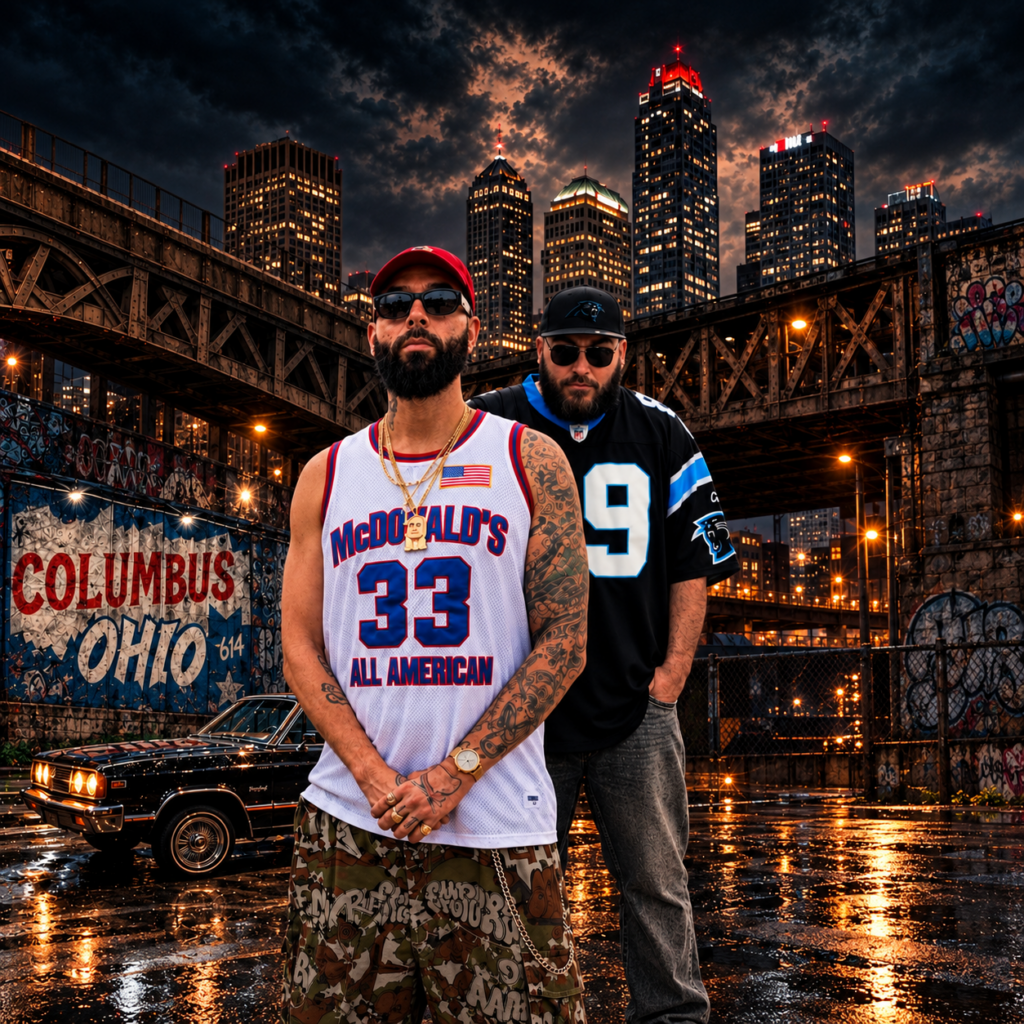
French DJ and producer DJ King Flow returns with another edition of Mixtape Addict, this time featuring Copywrite on Scientific Sound Asia. Scientific Sound Asia operates as an international radio station, DJ agency, promoter and music news platform, supporting artists connected with both the foundations and continuing development of Hip Hop culture.
DJ King Flow began DJing at the age of fourteen and developed a style firmly rooted in Boom Bap and 1990s Hip Hop. Those foundations remain central to his approach, although his selections regularly place contemporary independent artists alongside established names rather than treating the music purely as nostalgia.
That connection between generations has become an important part of his identity as both a selector and producer. Hard drums, sample-driven production and lyric-focused records sit alongside newer independent releases from artists continuing those traditions across different parts of the world.
His career has included collaborations with established names including Ras Kass, Tragedy Khadafi, O.C., Juicy J and Khujo Goodie. These projects reflect a long-term commitment to Hip Hop's foundations while keeping his production work connected with artists active across the present underground scene.
In 2015, DJ King Flow launched Mixtape Addict as a platform dedicated to independent Hip Hop. What began around mixtapes and radio developed into a wider project combining regular broadcasts, artist interviews, new music and direct support for rappers, DJs and producers.
The interview side of Mixtape Addict has become an important part of the project because it gives artists space to discuss their careers, influences and current work in greater depth. These conversations sit alongside the music and provide listeners with additional context around the people, labels and independent networks behind many of the records featured on the programme.
DJ King Flow's wider activity can be followed through Facebook, X and the Mixtape Addict YouTube channel. These platforms extend the project beyond radio through interviews, videos, releases and other material connected with the international underground.
Production has also become an increasingly visible part of his work, with instrumental projects providing another outlet for his musical identity. The Adventures of F.J. Parker combines Jazz-influenced melodies, soulful textures and deep grooves with the raw drum-led character associated with classic Hip Hop beatmaking.
Trill Legacy (Instrumentals) develops that side of his catalogue further by placing the emphasis entirely on his production. Without an MC at the centre, the project gives the arrangements, samples, drums and melodic ideas more room to demonstrate how his style operates independently.
His collaborative releases continue to connect that production work with underground rappers from different scenes. Warzone featuring Ice Crimi, Win or Lose featuring Imam T.H.U.G. and Money with Lex Lakaiser demonstrate how his beats support contrasting vocal approaches while retaining a recognisable production identity.
More recent work includes Back To Basics (Mixtape Addict) featuring Faf Larage, Napoleon Da Legend, Relo and DJ Djel. The project brings several voices together around the musical principles that have remained central to DJ King Flow's work since his earliest years behind the decks.
Bills (Remix) featuring Khujo Goodie extended his connection with established American artists, while Laser Rouge with Omaz and Joe Mack returned to the collaborative underground format that runs throughout his catalogue. The Movement featuring ISH-ONE added another international connection and reinforced the wider outlook behind Mixtape Addict.
That international direction also appears through Legacy with Dnzl Izm and Northwest Flow with Seattle MC King Khazm. Rather than concentrating exclusively on French or American artists, DJ King Flow uses Mixtape Addict to connect independent voices from different locations through a shared emphasis on lyricism, beatmaking and underground Hip Hop culture.
This week's featured artist is Copywrite, the Columbus, Ohio MC whose career became closely associated with the underground Hip Hop movement through his work with MHz and later MHz Legacy. Known for technical rhyme construction, dense wordplay and a battle-influenced delivery.
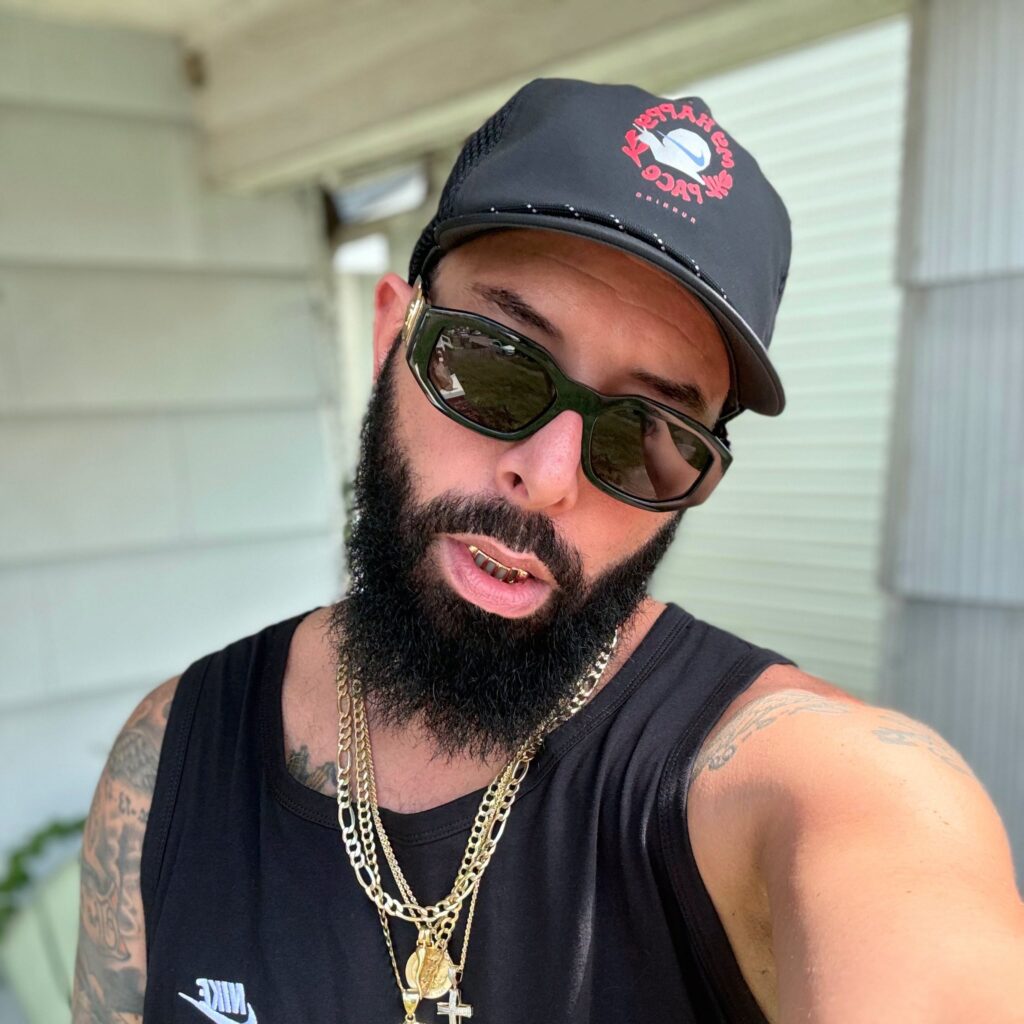
Interview Guest: Copywrite.
Copywrite is an underground Hip Hop artist from Columbus, Ohio, known for technical lyricism, dense rhyme schemes and a style built around punchlines and wordplay. He emerged through the Columbus underground as a member of MHz, later known as MHz Legacy, alongside RJD2, Tage Future, Jakki Da Motamouth and the late Camu Tao.
His early career also included membership of The Weathermen, the underground collective whose line-up connected artists including Cage, El-P, Tame One, Vast Aire, Camu Tao and Jakki Da Motamouth. Copywrite's solo breakthrough came with The High Exhaulted in 2002, an album that established him as one of the distinctive lyricists associated with the independent Hip Hop movement of that period.
He followed with The Life and Times of Peter Nelson in 2010 before releasing God Save the King through Man Bites Dog Records in 2012. The latter featured artists including Roc Marciano, Torae and Mac Lethal while working with producers such as RJD2, Marco Polo, Khrysis, Bronze Nazareth and Stu Bangas.
Copywrite continued expanding his catalogue with projects including Blood, Bath & Beyond, The High Exhaulted 2 and his collaborative work with Planet Asia. His writing has remained rooted in detailed rhyme construction and battle-tested lyricism while allowing more personal and reflective material to sit alongside the harder edge of his earlier work.
In 2024, he released The Last Supper through Man Bites Dog Records, bringing together collaborators from different periods of his career. The album included appearances from Slug of Atmosphere, Ras Kass and Mickey Factz, with production contributions including DJ Mighty Mi, Evidence and Swab.
Copywrite has remained active with new music, including the 2026 collaboration Copy My Style with Da Inphamus Amadeuz. Produced by Amadeuz, the track returns the focus to direct lyricism and reflects Copywrite's continuing connection with independent Boom Bap and underground Hip Hop more than two decades after his first solo album.
DJ King Flow puts Copywrite at the centre of Mixtape Addict 116, opening with Copy My Style alongside Da Inphamus Amadeuz before Evidence production drives Green Screen and King Flow reshapes Punchline Academy Freestyle. That opening run places the episode squarely within Underground Hip Hop, with Copywrite's punchline-heavy lyrical style setting the tone before the selection widens.
DJ Mega with Dizzy Dizasta lead into Napoleon Da Legend, Dub Sonata and Tone Spliff before Madman Rodney Sage joins Rockness Monstah on On The Way. Obleak, Ruste Juxx and Yotto Beatz then reinforce the harder Boom Bap side of the programme, connecting contemporary independent releases with the rugged Brooklyn and New York traditions that run through several of the featured MCs.
DJ Hoppa, Kail Problems and Marley B broaden the middle section with Space Jam, while Queens-rooted Nutso, Kaeson Skrilla with Doza The Drum Dealer and Derange Da Messiah keep the programme focused on lyric-driven underground rap. Nina Sky's I'm Hot in a DJ King Flow remix introduces a lighter crossover moment before Erick Sermon reconnects the set with East Coast Hip Hop through Chill alongside The Gang WGO.
The closing stretch turns decisively west as Compton Av, Steelz and Snoop Dogg bring YAYA (Remix) into the mix, followed by The Outfit and Butch Cassidy over DJ King Flow production. Snoop Dogg and Dr. Dre then close the musical section with Outta Da Blue, giving the episode a strong West Coast Hip Hop finish before DJ King Flow ends the show with his interview with Copywrite.
DJ King Flow welcomed Columbus MC Copywrite to Mixtape Addict for an extensive conversation about DJ culture, Columbus Hip Hop, mixtapes, Punchline Academy, upcoming projects and the people who helped shape his career. Copywrite approached the interview as someone deeply rooted in the culture, repeatedly stressing the importance of understanding Hip Hop history while still finding new ways to develop as an MC.
Asked to choose his favourite DJs, Copywrite named Grandmaster Flash, DJ Jazzy Jeff and DJ Noise, while admitting that narrowing the list was difficult because so many selectors influenced him. He credited Flash with helping establish the foundations of DJ culture, praised Jazzy Jeff's technical precision and early production work, and described DJ Noise as one of the most impressive battle DJs he has ever encountered.
Growing up in Columbus gave Copywrite a broad introduction to Hip Hop through DJs, B-boys, graffiti writers, open mics and local battles. He believes that environment helped ground him in the culture because he was surrounded by people who understood its different elements rather than treating rapping as something disconnected from everything around it.
The local scene became especially important after Copywrite discovered the Groove Shack, a Columbus record shop that hosted DJ battles and open mics while also appearing on public-access television. Entering those battles helped him overcome the lack of confidence he had as a younger rapper and develop the performance skills that later became central to his identity as an MC.
That history led naturally into a discussion about his recent connection with Infamous Amadeuz and Punchline Academy. The relationship began after a New Jersey performance and interview connected with a Tame One documentary, where Amadeuz was encouraged to bring Copywrite into one of his ciphers because of his punchline-heavy and wordplay-focused style.
Copywrite later appeared on Amadeuz's programme and returned for further cipher sessions involving artists such as Al Scratch and Nine. Their working relationship then expanded beyond radio into original music, with Amadeuz producing and scratching on Copy My Style before travelling to Columbus to film the video and work on additional material.
He praised the wider Punchline Academy team for creating an environment where established and developing MCs can demonstrate their ability without being reduced to current industry visibility. Copywrite connected that work to the lineage of radio and cipher culture associated with figures such as Bobbito and Lord Sear, seeing it as an important space for keeping lyric-focused Hip Hop active.
Copywrite also gave credit to Shade 45 and Eminem for providing platforms where DJs, radio hosts and MCs can still support different branches of Hip Hop culture. For him, programming involving people such as DJ Eclipse, DJ Riz, Infamous Amadeuz and others demonstrates that a major platform can still make room for skilled artists who are not simply part of the current mainstream cycle.
The conversation then returned to veteran MCs who are still producing strong material, with Copywrite highlighting Al Scratch and Nine as examples of artists capable of returning to a cipher and competing at a high level. He argued that records and performances from earlier generations should not be treated purely as history when those artists are still capable of creating relevant work in the present.
Copywrite said his bond with Amadeuz has already produced multiple songs and could eventually develop into a larger collaborative project. That possibility is particularly meaningful to him because he has devoted much of his life to MCing and Hip Hop, including periods where there was little outside attention but he continued writing and recording regardless.
Asked whether he misses mixtapes, Copywrite explained that he experienced several different phases of the format, from early New York tapes and Doo Wop to Tony Touch's cipher-heavy releases and the later 50 Cent model built around rappers attacking existing instrumentals. Each period offered something different, but all of them influenced the way he understood how an MC could use mixtapes to display skills outside the structure of a conventional album.
His own Cruise Control project drew heavily from that tradition, using the freestyle-and-industry-beat approach that became prominent during the 2000s. Copywrite said he would like to return to that format, potentially recording over earlier J. Rawls production and other instrumentals from producers whose work he has long admired.
For now, his priority is an ambitious album schedule he originally planned while incarcerated, with the goal of releasing two records a year over several years. The strategy is designed to solve what he sees as one of the biggest problems in his career, not the response from people who hear his music, but the fact that too many potential listeners still have not encountered it.
One side of that plan centres on producer J. Rawls, while another involves DJ Mighty Mi, with Copywrite comparing the alternating-producer approach to artists who build distinct bodies of work with different collaborators. He has already begun The High Exalted and the Mighty with Mighty Mi, while another completed side project brings him together with Bless Picasso and producer Dub Sonata.
Copywrite also discussed the importance of DJs to every part of an MC's career, whether through scratching, production, radio or mix shows. He thanked King Flow for playing his music and recognised that the relationship between MC and DJ is still fundamental even though the platforms and technology around it have changed.
His advice to younger MCs was to keep working regardless of whether people initially understand or support their direction. Copywrite encouraged artists to separate useful criticism from simple negativity, accept honest feedback when it can improve the work and avoid allowing somebody else's opinion to end a career before it has properly developed.
He placed equal importance on studying the MCs who established the techniques younger rappers now inherit, naming figures such as Grandmaster Caz, Busy Bee, Melle Mel, Rakim and Kool G Rap. Understanding that history, he argued, prevents artists from unknowingly repeating ideas that were already developed decades earlier while also giving proper recognition to the people who created the opportunities later generations now have.
Closing the interview, Copywrite thanked listeners who have bought, downloaded, shared or simply recommended his music over the years, saying that without their support he would only be somebody writing rhymes for himself. He also credited The Intellect, Ill Nelson, Bobbito, DJ Mighty Mi, Mr. Eon and Infamous Amadeuz among the people who gave him knowledge, opportunities or renewed exposure at important stages of his career.
Copywrite finished by revealing another forthcoming project, If It Ain't Rawls, It Ain't Right, built entirely around J. Rawls production. He described it as his first full project with one producer handling every beat and said he is particularly eager for listeners to hear the chemistry they developed across the album.
The live broadcast is scheduled for Tuesday, September 29th, 2026, from 8 to 9 PM Indochina Time (ICT), with a replay set for Saturday from 8 to 9 AM (ICT).
DJ King Flow and Copywrite – Mixtape Addict Show Episode 116
Copywrite & Da Inphamus Amadeuz - Copy My Style
Copywrite - Green Screen (Prod. Evidence)
Copywrite - Punchline Academy Freestyle (DJ King Flow Remix)
DJ Mega & Dizzy Dizasta - Little One
Napoleon Da Legend, Dub Sonata & Tone Spliff - Sports Vet
Madman Rodney Sage & Rockness Monstah - On The Way
Obleak, Ruste Juxx & Yotto Beatz - ManHunt
DJ Hoppa, Kail Problems & Marley B - Space Jam
Nutso - Redemption
Kaeson Skrilla & Doza The Drum Dealer - Losers
Derange Da Messiah - Everything Brand New
Nina Sky - I'm Hot (DJ King Flow Remix)
The Gang WGO & Erick Sermon - Chill
Compton Av, Steelz & Snoop Dogg - YAYA (Remix)
The Outfit & Butch Cassidy - Crazy Bout A Thot (Prod. DJ King Flow)
Snoop Dogg & Dr Dre - Outta Da Blue
DJ King Flow - Interview with Copywrite
Listen Here.